
Contextualizing the Leylatepe Phenomenon of the Southern Caucasus
Projektteam (FU)
Dr. Mark Iserlis, Institut für Prähistorische Archäologie, FU
Kooperationspartner*innen
PD Dr. Khagani Almamedov, Institute of Archaeology and Anthropology, Azerbaijan National Academy of Sciences
Dr. Karolina Hruby, Institut für Prähistorische Archäologie, FU
Mirjavid Aghalarov, Institute of Archaeology and Anthropology, Azerbaijan National Academy of Sciences
Nihad Mammadli, Istanbul University
Dr. Gwendoline Maurer, Cardiff University
Dr. Karolina Joka
Prof. Dr. Maxime Rageot, Rheinische Friedrich-Wilhelms-Universität Bonn
Dr. Modwene Poulmarc’h, Centre national de la recherche scientifique, CEPAM (UMR 7264)
Klementyna Mackiewicz, Department of Archeology, University of West Bohemia in Pilsen
Dr. Estelle Herrscher, Aix-Marseille Université, CNRS
Baku State University students
Workers from Jalilabad, Khyndyrystan and Yuzbashli
Finanzierung:
DFG Grant IS 312/6-1 „Kontextualisierung des Leylatepe-Phänomens“/“Contextualizing the Leylatepe Phenomenon“)
Gerda Henkel Stiftung AZ 04/F/25 Late Chalcolithic Farmers, Herders and Administrators? High Resolution Research Project at Leylatepe and Janavartepe, Azerbaijan
Projektbeschreibung (auf Englisch)
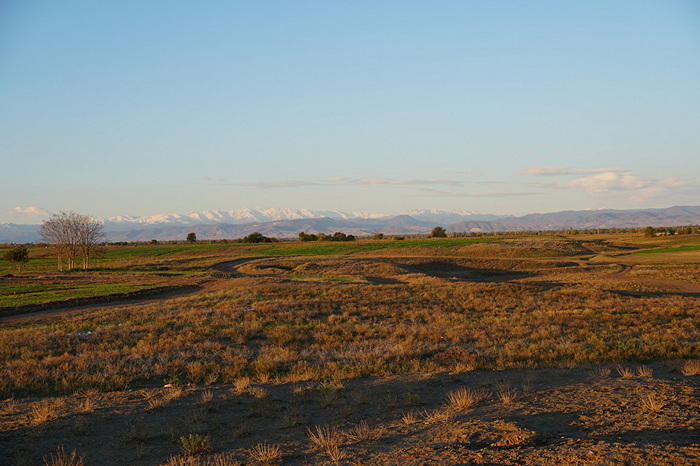
Fig 1. Karabakh Steppe in November 2024, looking southwest from Janavartepe. Upper Karabakh mountains in the background, covered with snow (Photo: M. Aghalarov, K. Hruby; LKREP).
During the dramatic technological and social transformations of the fourth millennium BC, the Caucasus witnessed the emergence of several distinctive cultural phenomena that have intrigued researchers for decades. The Late Chalcolithic period of the Northern Caucasus was marked by the emergence of the Maikop phenomenon, known for its burial mounds, gold treasures and associated with Mesopotamian and South Caucasian migrants. The subject of our multidisciplinary project is the Leylatepe cultural phenomenon, which occurred in the Southern Caucasus at the very beginning of the 4th millennium BCE. Various aspects of the material culture of the Leylatepe phenomenon were linked with the Mesopotamian Ubaid and Uruk as well as with the North Caucasian Maikop cultures. But our understanding of the phenomenon remains limited, particularly regarding its chronological framework, core components of material culture, settlement structure, economy and social organization.
Our Lowland Karabakh Research and Excavation Project (LKREP), launched in 2022, aims to provide a comprehensive analysis that will inspire renewed discussions on the nature of the Leylatepe phenomenon and its place within the broader context of Caucasian, Near Eastern and European cultures. The aim of our project is to create systemized descriptions of two neighboring Leylatepe settlements, toponymic Leylatepe and Janavartepe. Janavartepe (Canavartəpə) is a mound with a diameter of 100 m, located on a river terrace. Leylatepe is a relatively small mound (2 m high and 50-60 m in diameter), located 2.6 km northwest of Janavartepe.
The study focuses on two main aspects: (1) the multidisciplinary study of material culture from well-documented archaeological contexts and, based on this, (2) the description of possible intra- and intercultural dynamics. The research team includes archaeologists and specialists in ground and chipped stone analyses, archaeobotany, archaeozoology, organic residue analysis, physical anthropology and stable isotope analysis who collaborate both in the field and in the laboratory.
Leylatepe was excavated in 1984-1990 by Ideal Narimanov on behalf of the Institute of History of the Azerbaijan SSR Academy of Sciences. Four “architectural horizons” of a total depth of 1.55-1.65 m were defined in one trench of 324 m2. The results of the excavations were partially published, but the settlement's dating is based on a single sample. Twenty years ago, the trench was filled in with soil and garbage, after which a garden was created and a restaurant with pavilions was built on the mound.
The basic aim of our 2022 fieldwork was to identify the remains excavated at Leylatepe in the 1980s and create a stable radiocarbon-based chronological framework of Leylatepe. The recovery and identification of the remains excavated by Narimanov made it possible to establish a stratigraphic link between the old and the renewed excavations.
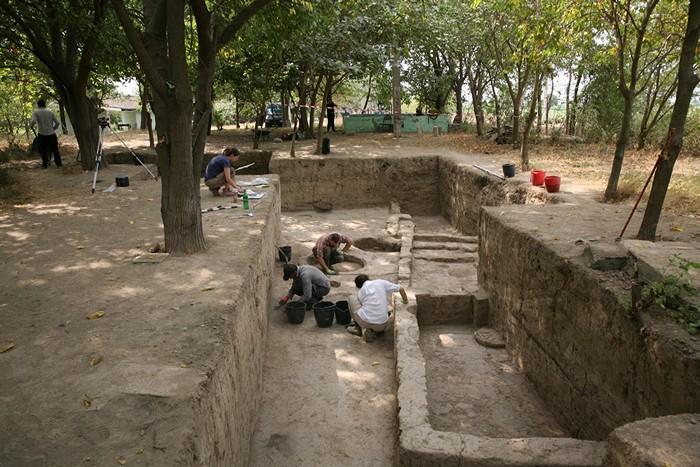
Fig 2. Leylatepe, Area IN (west) in August 2025, looking south. A long mudbrick wall (center) and exterior area with pits and installations (left to the wall) (Photo: M. Iserlis; LKREP).
The Late Chalcolithic strata at Leylatepe consist of alternating settlement layers with rectangular mudbrick structures of varying orientations, pits, clay installations and hearths (Fig. 2). In the western part of the mound, excavated by Narimanov, a long wall of a house and a two-chamber pottery kiln were revealed. The area between the kiln and the house was used for different purposes and covered with layers of clay and mudbrick material from the kiln (Fig. 3).
In the central part of the mound, we explored rectangular mudbrick structures, clay installations, pits and pottery concentrations. The northern edge of the mound served as the food preparation area, characterized by a series of dark, ashy layers with concentrations of pottery sherds, pit features, postholes, grinding stones, and accumulations of animal bones.
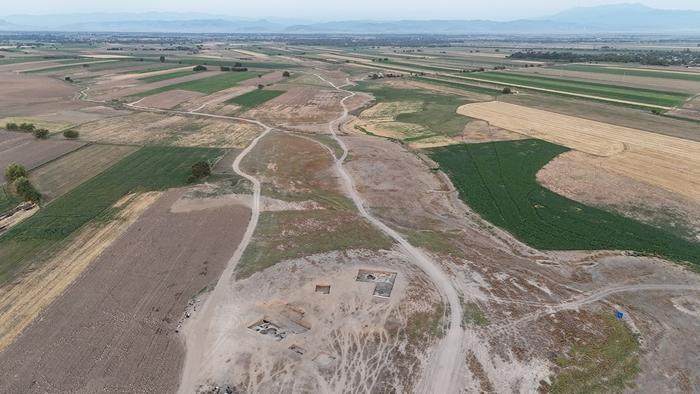
Fig 3. Janavartepe in August 2025 (looking west-southwest), the steppe, the Karabakh Range and the Murovdag (Photo: M. Aghalarov, Y. Demchuk; LKREP).
The second excavated site, Janavartepe, presents absolutely different stratigraphy, architecture and spatial organization (Fig. 3). The south-eastern part of Janavartepe was heavily damaged by bulldozers. Our first goal was to document the layers and understand the stratigraphy. A long section was first cleared, and a trench was excavated back from the section face. The south-eastern, northern, and north-western soundings revealed a dense stratigraphic sequence, including strata from the Late Chalcolithic, Early Bronze, Late Bronze Age-Early Iron Age, Medieval, and Soviet periods.
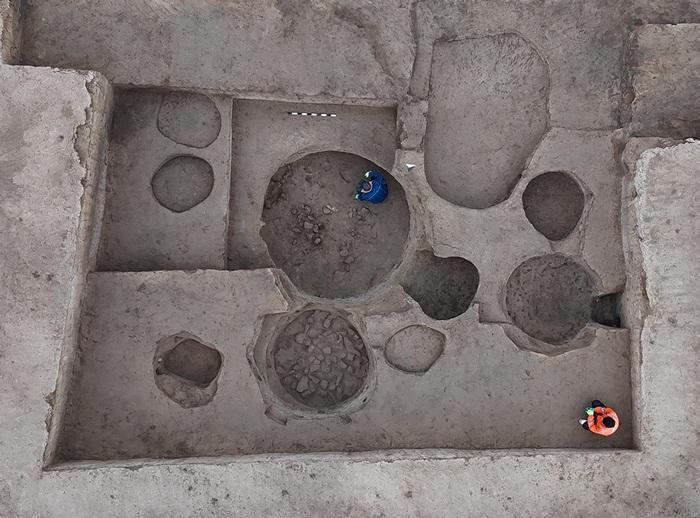
Fig. 4. Janavartepe, Area A (south-east). Two-room dugout with a collapsed roof and in situ finds on the floor (center), smaller two-room dugout to the left (north) and storage pits (Photo: M. Aghalarov, K. Hruby; LKREP)..
The Late Chalcolithic inhabitants of the site constructed rounded or oval dugouts (Fig. 4). Most of the dugouts include two rooms and sometimes connected pits. The areas around were carefully plastered. Collapsed roof fragments, mixed with installation fragments, animal bones, bone tools, groundstone and pottery fragments were found on the floors of the dugouts.
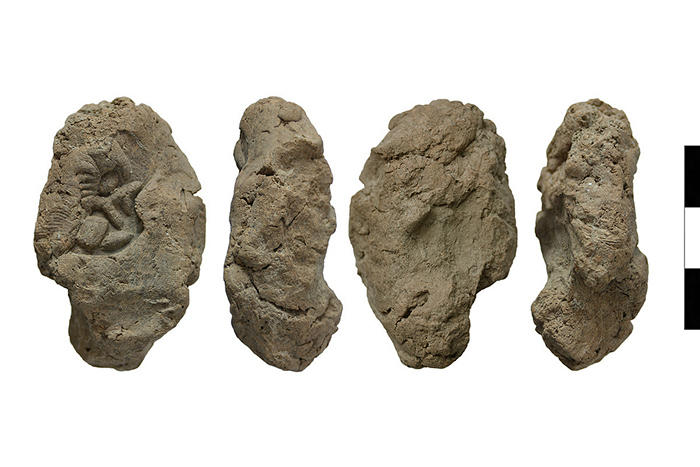
Fig. 5. Cretula fragment from Janavartepe (Photo: Elchin Hasanov; LKREP).
Additional surprising discoveries in the dugouts were cretulae, stamped clay lumps used to seal containers and doors (Fig. 5). Although several seals have been found previously at Late Chalcolithic sites in the Southern Caucasus, their use as functional administrative devices has never been documented. The discovery of dozens of cretulae fragments bearing different impressions in Paris changes our understanding of the phenomenon and opens the discussion on the possibility of pre-writing administration in Late Chalcolithic Europe.
High-resolution excavations combined with multidisciplinary analyses allow us to move beyond the conventional descriptive framework of the Leylatepe phenomenon. Two geographically proximate settlements (2.6 km apart), contemporaneous and belonging to the same cultural phenomenon, nevertheless display distinctly different characters and developmental trajectories. This evidence fundamentally challenges the long-standing “flat” interpretation of the South Levantine Late Chalcolithic in the literature since the 1980s and, for the first time, enables the reconstruction of the economic and social dynamics behind the term “Leylatepe culture.”
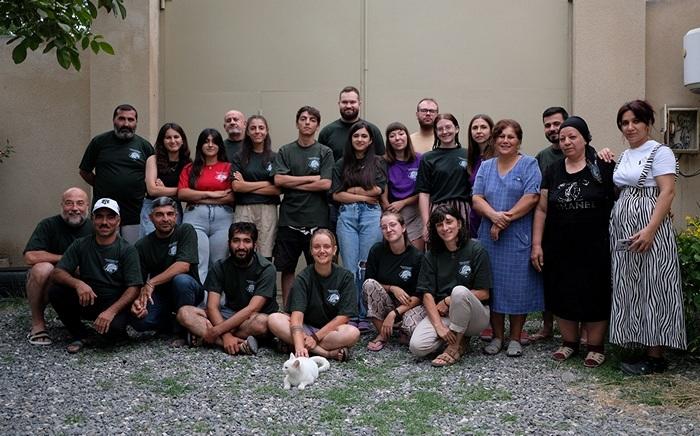
Fig. 6. The Leylatepe excavation team.
